The Sake Brewer's Son Who Carried Scotland to Japan
A young Japanese man sailed to Scotland in the 1910s, learned to make whisky, married a Scottish woman, and brought it all home. From that journey came two rival empires and an entire national industry that now beats the Scots at their own game.
By Fiona MacAllister
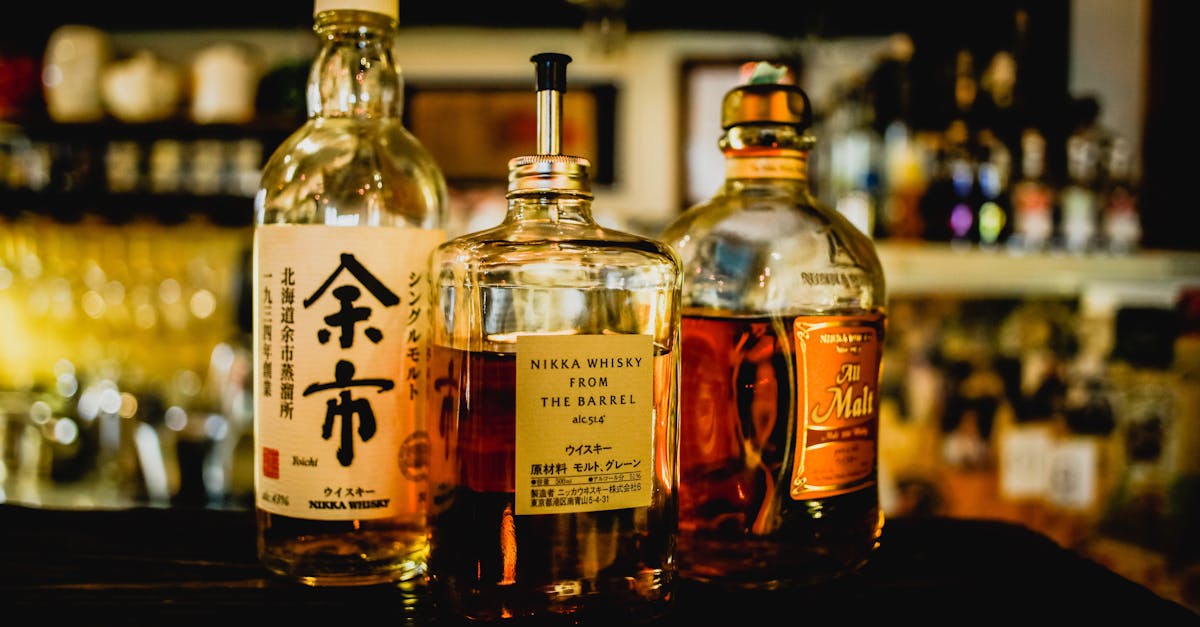
Today, Japanese whisky sits alongside the finest Scotch in the estimation of the world's connoisseurs, winning the top international awards and commanding collector prices to match. It can feel as though it has always been there. It has not. The entire Japanese whisky industry traces back to a single, almost romantic journey made a little over a century ago, when a young man from a sake-brewing family sailed halfway around the world to Scotland to learn a craft his own country did not yet possess, and came home with the knowledge, and a Scottish wife, to build something new. His name was Masataka Taketsuru, and his story, entwined with that of the businessman who backed him, Shinjiro Torii, is one of the great tales of how a tradition is transplanted, and of how a student can end up surpassing the master.
The pilgrimage to Scotland
Masataka Taketsuru was born in the 1890s near Hiroshima, into a family that had brewed sake for generations, so the making of fine drink was in his blood. But he became fascinated by whisky, a Western spirit almost unknown in Japan at the time, and he did something extraordinary for a young Japanese man of his era. In the years around the First World War, he travelled to Scotland to learn how it was really made, at the source.
He did not merely observe. He enrolled at the University of Glasgow to study chemistry, and he apprenticed in working Scottish distilleries, getting his hands dirty, learning the craft from the mash tun to the still to the cask. And in the course of it, he fell in love, not only with whisky but with a Scottish woman named Rita Cowan, whom he married and who returned with him to Japan, leaving her own country to support his improbable ambition for the rest of her life. Taketsuru came home carrying two things Japan did not have: a genuine, first-hand mastery of Scottish whisky-making, and a living link to the culture that had perfected it.
The partnership that started an industry
Knowledge alone does not build an industry. It needs capital and vision, and those came from Shinjiro Torii, an entrepreneur who believed, against considerable scepticism, that he could create a whisky for the Japanese palate and build a market for it. Torii hired Taketsuru, and together, in 1923, they established the Yamazaki distillery, near Kyoto, on a site where three rivers meet and the water and climate suited the work. It was Japan's first genuine commercial whisky distillery, and it was the direct offspring of Taketsuru's Scottish education and Torii's entrepreneurial nerve. From that single distillery, the whole of Japanese whisky grows.
But the partnership carried a tension inside it that would prove creative rather than destructive. Torii and Taketsuru disagreed, fundamentally, about what Japanese whisky should be. Torii, the businessman, wanted to craft a whisky adapted to Japanese tastes, softer and more suited to the local market he was trying to build. Taketsuru, the purist, wanted to make whisky the authentic Scottish way, in the Scottish style, in a place as much like Scotland as he could find. Neither was wrong. They simply had different dreams.
The split that doubled everything
In 1934, the two men parted ways, and the split, far from weakening Japanese whisky, gave it two engines instead of one. Taketsuru left to pursue his own vision, and he went looking for the corner of Japan that most resembled Scotland. He found it in the north, in Hokkaido, with its cold, damp, maritime climate, and there he founded his own distillery, Yoichi, and the company that became Nikka. Torii and his company, which became Suntory, continued down their own path from Yamazaki.
So Japan ended up with two great whisky houses, born of the same journey but pointed in different directions: one, Suntory, pursuing a refined harmony suited to the Japanese sensibility; the other, Nikka, chasing a rugged, peaty, uncompromising authenticity closer to the Scotch that Taketsuru had fallen in love with as a young man. The rivalry between them, and the contrast between their philosophies, drove Japanese whisky forward for the rest of the century, each house pushing the other, until between them they had built a national industry capable of standing with the very best in the world.
The student surpasses the master
Here is the part that ought to make every established industry nervous, and here we offer a view. Japanese whisky began as a humble, faithful imitation. Taketsuru went to Scotland precisely to copy a craft his country did not have, and the early Japanese whiskies were, unashamedly, attempts to reproduce Scotch. And yet, over the following decades, the student did not merely catch up with the master. In blind tastings and international competitions, Japanese whiskies began to beat the Scottish and world whiskies they had once imitated, taking the highest honours and forcing the old guard to take them seriously as equals and sometimes as betters.
That arc, from reverent imitation to genuine superiority, is one of the most instructive patterns in all of craft, and it is worth internalising. The imitator who studies the master deeply, with humility and rigour, and then adds the discipline and sensibility of a different culture, can end up producing something that surpasses the original. Taketsuru did not copy Scotland carelessly. He learned it to the bone, and then he and his rivals applied a distinctly Japanese devotion to precision, blending, and refinement, and the result was a whisky tradition that the Scots themselves now study.
The journey that never really ended
The lesson of Japanese whisky is finally a lesson about how greatness travels. It began with one young man's willingness to cross the world to learn something his country lacked, to immerse himself so completely that he married into the culture, and to bring the knowledge home and let it take root in new soil. From that single pilgrimage grew two rival empires and an entire industry that now stands among the finest on earth. A tradition, it turns out, is not the possession of the place that invented it. It belongs to whoever is willing to learn it most deeply and carry it furthest, and a sake brewer's son from Hiroshima carried Scotland further than almost anyone could have imagined, and made it, somewhere along the way, unmistakably his own.
More in Food & Beverage
The Two-Million-Dollar Bottle: The Story of the Macallan 1926
It was distilled the year before the Great Depression, forgotten in a cask for sixty years, and bottled just forty times. Today a single bottle sells for more than a house. Here is how whisky became the most valuable liquid on earth.
The Ranking That Has Governed Bordeaux for 170 Years
In 1855 an emperor asked some wine brokers to make a list. They ranked the great châteaux by price into five tiers, and that list, drawn up in a matter of weeks, still decides the fate of the world's most famous wines today.
The Prince, the Mistress, and the World's Most Expensive Wine
In 1760 a French prince and a king's mistress went to war over a tiny patch of Burgundian dirt smaller than a football field. The prince won, took its wine off the market entirely, and gave it his name. It is still the most coveted wine on earth.