The Ranking That Has Governed Bordeaux for 170 Years
In 1855 an emperor asked some wine brokers to make a list. They ranked the great châteaux by price into five tiers, and that list, drawn up in a matter of weeks, still decides the fate of the world's most famous wines today.
By Fiona MacAllister
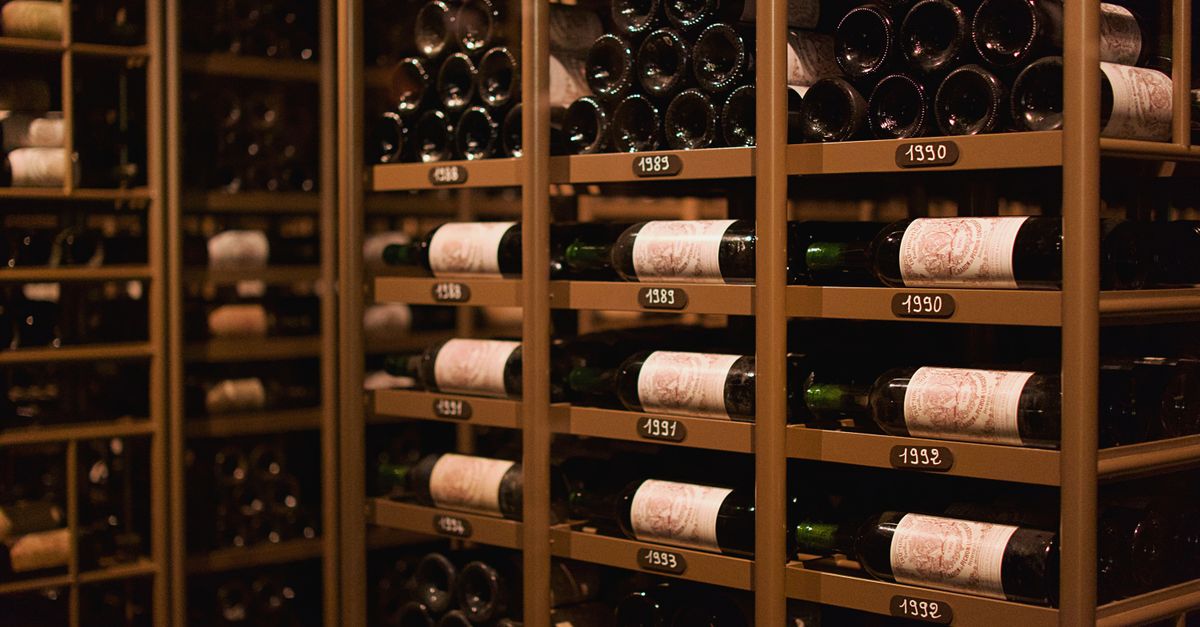
In 1855, France was preparing to show itself off to the world. The emperor, Napoleon III, was staging a great exhibition in Paris, a showcase of French achievement, and he wanted the nation's celebrated wines to be presented to visitors in some orderly way. So he asked for a classification, a ranking of the best wines of Bordeaux. Some wine brokers set to work, ranked the great estates by their reputation and, crucially, their trading price, sorted them into five tiers, and produced a list. That list, thrown together for a trade fair over a matter of weeks, has governed the hierarchy and much of the pricing of Bordeaux for nearly a hundred and seventy years, virtually unchanged. It is one of the most powerful and enduring pieces of branding ever created, and understanding it explains a great deal about how prestige really works.
A list made of prices
The mechanics are worth understanding, because they are more honest than the mythology that grew up around them. The brokers who drew up the 1855 Classification did not convene a panel of tasters to judge the wines glass by glass. They did something much more practical. They ranked the châteaux according to how much their wines had been fetching in the market, over years of trading. Reputation and price were the criteria, and the two were really one thing, because a château's price was the crystallised judgment of the market on its quality over time.
The wines were sorted into five levels, from first growths down to fifth growths, the French word being crus. At the very top sat a tiny group of first growths, the wines that had consistently commanded the highest prices: Lafite, Latour, Margaux, and Haut-Brion. Almost every classified wine came from the Médoc, the great peninsula of gravel north of the city, with a single famous exception, Haut-Brion, from the Graves to the south, whose quality was simply too obvious to leave off. And that was it. A hierarchy of the region's red wines, fixed in 1855, based on the accumulated verdict of the market.
The list that would not change
Here is the astonishing part. That ranking, made for a temporary exhibition, was never meant to be permanent, and yet it became one of the most immovable structures in the entire world of luxury. In nearly a hundred and seventy years, it has been altered essentially once in any way that matters. For all that time, through wars, depressions, the transformation of winemaking, the rise and fall of individual estates, the tiers set down in 1855 have held. A wine classified as a first growth in 1855 is, with one exception, a first growth today, and a fifth growth is still a fifth growth, regardless of how the actual wine in the bottle may have changed over a century and a half.
The one great exception is a story in itself, and it proves the rule. Château Mouton Rothschild had been ranked a second growth in 1855, and its owner, Baron Philippe de Rothschild, spent decades refusing to accept it, campaigning relentlessly to be promoted to the first rank he believed his wine deserved. It took him the better part of his life. Finally, in 1973, the classification was amended and Mouton was elevated to first growth, the only substantive change ever made. The baron rewrote his estate's motto to mark it. That it took a titan of the wine world half a century of effort to achieve a single promotion tells you exactly how rigid the system is.
Why fixing it in place was the genius
We want to argue something slightly counterintuitive here, because it is the real lesson. The 1855 Classification is, in an obvious sense, absurd. It is based on market prices from before the American Civil War. It takes no account of how wines have actually evolved, of estates that have soared or slid in quality since, of new owners and new techniques. A ranking that cannot meaningfully change cannot reflect reality. By any rational standard, it should have been scrapped and redone a dozen times.
And yet its rigidity is precisely the source of its power, and this is the insight worth taking away. Because the classification never changes, it functions as a permanent, unassailable brand. A first growth is a first growth forever, and that permanence is worth an immense amount, because it means the prestige, and the price premium that comes with it, is protected against time, fashion, and even the estate's own occasional lapses. The châteaux at the top are not selling only wine. They are selling membership in a club whose membership was fixed in 1855 and cannot be revoked, and scarcity of membership that can never be diluted is one of the most valuable things in commerce.
The lesson for anyone who builds prestige
Here is our view, offered as commentary rather than advice. The 1855 Classification teaches that enduring prestige is often less about ongoing merit than about a fixed, credible hierarchy that the world agrees to honour. The first growths have coasted, at times, on their ranking; lesser-classified wines have, at times, outperformed them in the glass. It has not mattered much, because the ranking is the asset, and the ranking does not move. Permanence created a moat that quality alone never could.
This runs against a comforting belief that the cream always rises and merit is continuously rewarded. In the real world of luxury, an early, credible, and above all durable classification can lock in advantage for centuries, almost regardless of what happens afterward. The estates blessed by a group of brokers in 1855 have enjoyed a hundred and seventy years of protected prestige for the accident of where they stood on the day the list was drawn. The next time you wonder why one label commands multiples of another that may taste every bit as good, remember the exhibition of 1855, and the quiet power of a hierarchy that everyone agreed never to change.
More in Food & Beverage
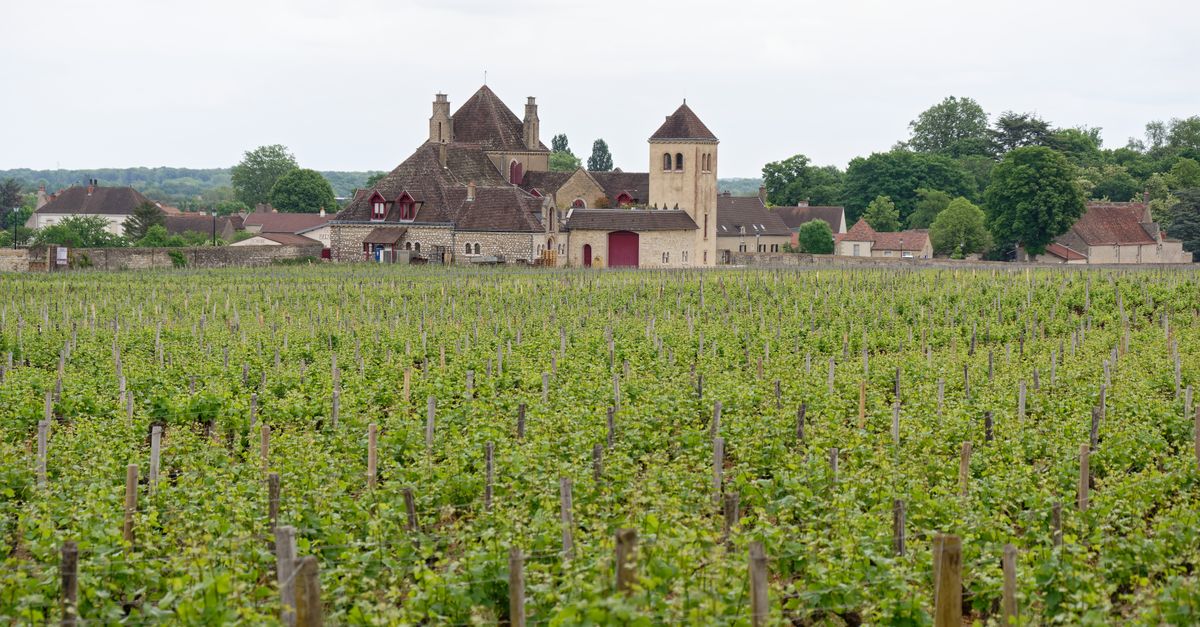
The Prince, the Mistress, and the World's Most Expensive Wine
In 1760 a French prince and a king's mistress went to war over a tiny patch of Burgundian dirt smaller than a football field. The prince won, took its wine off the market entirely, and gave it his name. It is still the most coveted wine on earth.
The Two-Million-Dollar Bottle: The Story of the Macallan 1926
It was distilled the year before the Great Depression, forgotten in a cask for sixty years, and bottled just forty times. Today a single bottle sells for more than a house. Here is how whisky became the most valuable liquid on earth.
The Sake Brewer's Son Who Carried Scotland to Japan
A young Japanese man sailed to Scotland in the 1910s, learned to make whisky, married a Scottish woman, and brought it all home. From that journey came two rival empires and an entire national industry that now beats the Scots at their own game.