Twice Founded in Glashutte: A. Lange & Sohne and the Watch That Came Back From the Dead
Ferdinand Adolph Lange built a watch industry in a poor Saxon mining town in 1845. A war and a nationalization erased it. In 1990, his great-grandson started again from nothing.
By Henry Ashcombe
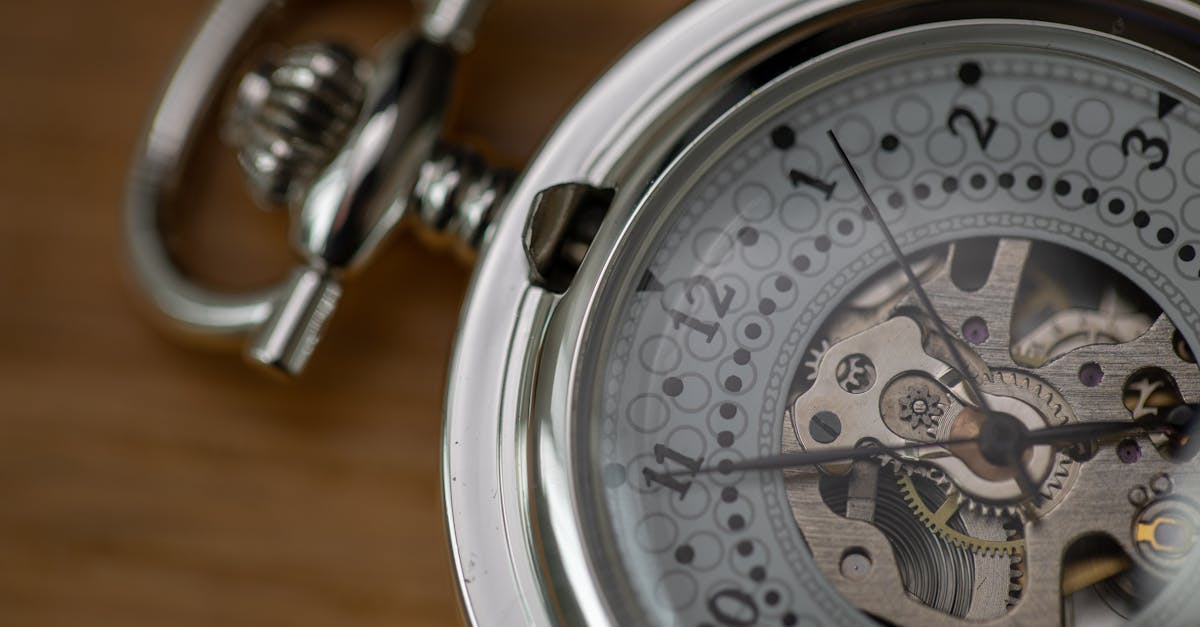
Most heritage in luxury is a story a marketing team tells about a logo. Every so often you meet the real thing, a heritage so genuine that it was killed, buried for forty years, and then dug up and rebuilt by hand by a man in his sixties who refused to let his family's name stay dead. That is the story of A. Lange & Sohne, and it is the finest answer in all of watchmaking to a question the industry usually dodges: what is heritage actually worth, and can it be rebuilt once it is gone.
A watch factory as a rescue plan
Begin in 1845, in Glashutte, a poor silver-mining town in the Saxon mountains that had fallen on hard times. A young watchmaker named Ferdinand Adolph Lange, trained in Dresden under the court clockmaker Johann Christian Friedrich Gutkaes, whose daughter he had married, did not simply open a workshop. He proposed something closer to economic development. He secured backing from the Saxon government and took on fifteen local apprentices, teaching them watchmaking from the ground up. Then, when they had mastered their crafts, he encouraged them to leave and set up their own specialist supplier firms.
Think about how unusual that is. Lange deliberately seeded his own competitors, because he was not trying to build a company so much as an industry. Within a generation Glashutte was a cluster of interlocking watchmakers, case makers, dial makers, and movement specialists, and it became the heart of German fine watchmaking. Lange also pushed the craft itself forward, standardizing on the three-quarter plate in German silver, a material that ages to a warm patina, and building movements of a sober, architectural beauty quite distinct from the Swiss style. This was not a brand. It was a place, a method, and a lineage, and by the early twentieth century a Lange pocket watch was among the finest objects a person could own.
Everything, then nothing
Then the twentieth century did to Lange what it did to so much of Germany. On the very last night of the Second World War in Europe, in May 1945, a Soviet air raid destroyed the main Lange workshop. That alone might have been survivable. What followed was not. Glashutte lay in the Soviet occupation zone, soon to become communist East Germany, and in 1948 the private company A. Lange & Sohne was expropriated and nationalized. It ceased to exist. The Glashutte firms were folded into a single state-owned combine that made serviceable, ordinary watches for the Eastern Bloc. The name Lange, which had meant some of the best watchmaking on earth, simply vanished from the market. For forty years, if you wanted to buy a new A. Lange & Sohne, you could not. There was no such thing.
We want to dwell on that erasure, because it is what makes the rest of the story mean something. This was not a brand that faded or was mismanaged into irrelevance. It was deliberately abolished by a state, its factory bombed, its name struck off, its family scattered. Walter Lange, the great-grandson of the founder, fled west. By any reasonable reckoning, A. Lange & Sohne was finished, a footnote in books about a lost golden age.
The man who came back
History gave it one narrow opening, and one man walked through it. When the Berlin Wall fell and Germany reunified, Walter Lange was already in his mid-sixties, an age when most people are winding down. Instead he went back to Glashutte to refound the company his family had built and the state had destroyed. He did not do it alone. He partnered with Gunter Blumlein, one of the sharpest executives in the industry, the man then steering IWC and Jaeger-LeCoultre, who understood both watchmaking and how to rebuild a brand with rigor rather than nostalgia.
On 7 December 1990, they registered Lange Uhren GmbH. The date was not an accident. It was exactly 145 years to the day after Ferdinand Adolph Lange had founded the original firm. That is the kind of detail that tells you everything about the seriousness of the enterprise. This was a man consciously picking up a thread that had been cut in 1948 and tying it back together on the anniversary of its beginning.
But a date and a name are not a watch. The hard part was starting a high watchmaking manufacture, in a town whose skills had been dulled by four decades of state production, and making something worthy of the name from scratch. It took four years.
Four watches and an outsize date
On 24 October 1994, A. Lange & Sohne presented its first four wristwatches of the modern era: the Saxonia, the Arkade, the Tourbillon Pour le Merite, and the watch that would define the reborn house, the Lange 1. When the audience saw them, they understood immediately that this was not a revival trading on a logo. This was the real substance rebuilt.
The Lange 1 is worth understanding in detail, because it carries the whole history inside it. Its dial is asymmetric, everything arranged off-center yet perfectly balanced, an unusual and confident choice. And in the upper right sits its signature, the outsize date, two large numerals in twin windows, far bigger and clearer than any normal watch date. That feature is not a styling flourish. It is a direct quotation of the five-minute clock that Ferdinand Adolph Lange's own teacher, Gutkaes, had built in 1841 for the Semper Opera House in Dresden, a clock that displayed the time in large digits so the audience could read it from across the hall. Walter Lange put his family's origin story, the master, the opera clock, the Dresden lineage, right on the dial of his comeback watch. Inside, the movements carried the old Glashutte signatures rebuilt to a modern standard: the three-quarter plate in German silver, the hand-engraved balance cock, each movement assembled twice so that every part could be finished after the first fitting.
What heritage is actually worth
Here is our view, and it is the reason this story belongs in front of anyone thinking about luxury at all. Most brands treat heritage as a marketing asset, a founding date on the dial and a sepia photograph in the boutique, while the actual substance behind it has been hollowed out by decades of cost-cutting. Lange is the opposite case, the control experiment that proves what the real thing looks like. Here the heritage was genuinely destroyed, and then genuinely rebuilt, not as a logo but as method: the plates, the finishing, the engraving, the philosophy of making an entire industry rather than a single product.
That is why Lange sits, today, among the two or three most respected names in the whole field, admired even by people who cannot afford it, and why its watches hold their standing so well. The market can feel the difference between a heritage that is asserted and a heritage that is earned. Walter Lange, who died in 2017, spent the last third of his long life proving that the difference is real and that it can, against every reasonable expectation, be brought back from the dead.
So when a company waves its history at you, ask the Lange question. Not how old is the name, but is the substance actually still there, or is it a beautiful label on a hollowed-out thing. Ferdinand Adolph Lange built the substance in 1845. A war and a dictatorship destroyed it. And one determined man rebuilt it, on the anniversary, by hand, because some inheritances are worth refusing to lose.
More in Style

The Escapement the Swiss Said No To: George Daniels and the Co-Axial
In 1999 Omega fitted a genuinely new escapement to a production watch. An Englishman working alone had invented it twenty-five years earlier, and the industry had spent that whole time saying no.
Born on the Western Front: How Louis Cartier Built a Watch From a Tank
In 1917 Louis Cartier looked at the machine tearing across the battlefields of France and saw, of all things, a wristwatch. A century later the Tank is still the most quietly radical thing you can wear.

Drive Carefully, Me: The Rolex That Became the Most Expensive Watch on Earth
Rolex could barely give the Cosmograph Daytona away in the 1960s. Then a movie star wore one, a nickname stuck, and in 2017 his own watch sold for nearly eighteen million dollars.