Why Golf Has 18 Holes: The Old Course at St Andrews
Every golf course on earth has 18 holes, and almost no one knows why. The answer lies on a strip of Scottish coastland where the game has been played for six centuries and where, in 1764, someone decided four holes were too short.
By Declan Byrne
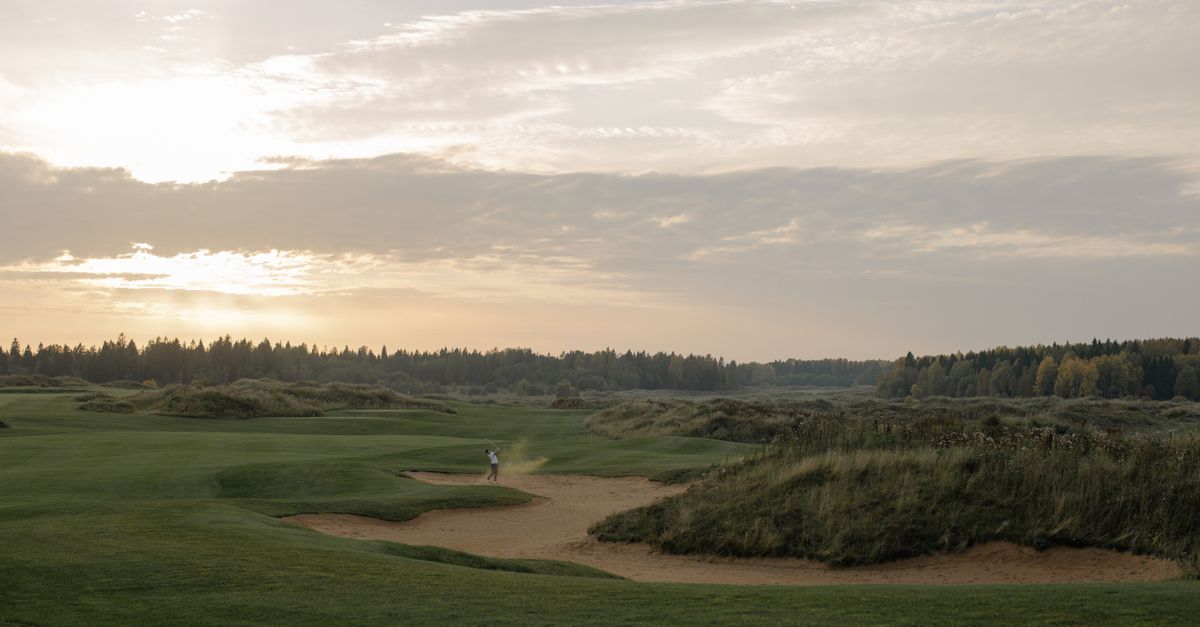
Every golf course in the world has eighteen holes. It is so universal a fact that almost no one ever stops to ask why. Why not sixteen, or twenty, or twenty-four? There is nothing natural or inevitable about the number. It comes, like almost everything else fundamental to golf, from a single strip of windswept coastal land in Scotland, the Old Course at St Andrews, the place the game itself calls home. The story of why golf has eighteen holes, and of how one ancient course came to set the rules for the entire world, is a lesson in the strange and lasting power of being first.
Where the game began
Golf has been played on the links at St Andrews since at least the fifteenth century, which is to say for something like six hundred years. Links land, the sandy, undulating, treeless ground where the shore meets the farmland, was useless for agriculture but perfect for the game, and the people of St Andrews took to hitting a ball across it toward distant targets in a way that gradually formalised into golf as we would recognise it. This is not one origin story among several. St Andrews is, by long and near-universal agreement, the home of golf, the place where the game grew up, and that primacy is the root of everything that follows.
In 1754, a group of noblemen, professors, and landowners formed a society to organise their play at St Andrews. That society, over time, became the Royal and Ancient Golf Club, known simply as the R and A, and it grew into one of the two bodies that to this day write and guard the rules of golf for almost the entire planet. So the place where the game began also became, naturally, the place from which the game was governed. Where you start matters, and golf started here.
The decision that set the world's standard
Now to the eighteen holes, and the answer is wonderfully arbitrary. For much of its early history, the Old Course did not have eighteen holes. It had twenty-two, with players heading out along the links to a far point and then turning and playing back, often to the same greens. In 1764, the members looked at their course and made a simple judgment. The first four holes, and correspondingly the last four coming home, were too short. So they combined them, turning eight short holes into four longer ones, and the course was left with eighteen.
That was it. A local decision, at one club, that four holes were a bit stubby and should be merged, reduced the Old Course from twenty-two holes to eighteen. There was no grand theory that eighteen was the ideal number for a round of golf, no science, no committee weighing the perfect length of an afternoon's play. It was a practical tweak to one course. But because that course was St Andrews, the home of golf, the seat of the game's governing authority, the change did not stay local. As golf spread across Scotland and then the world, new courses looked to St Andrews as the model, and they copied its eighteen holes. The arbitrary became the universal. Today every course on earth is built to a standard set by a handful of Scotsmen deciding, in 1764, that a few of their holes were too short.
A course unlike any other
The Old Course itself remains gloriously strange, a living museum of how golf was before anyone tried to make it tidy. Most of its greens are enormous and shared, double greens serving two holes at once, a quirk of the out-and-back routing that no modern architect would dare design. Its most famous features, the little stone Swilcan Bridge that every great player crosses on the final hole, the fearsome Road Hole with its perils, the blind shots and hidden bunkers, all speak of a course that grew organically over centuries rather than being drawn on a plan. It is the home of the Open Championship, the oldest of golf's major titles, and to walk it is to walk through the entire history of the game.
Modern golf, obsessed with fairness and definition, would never invent a course like this. Its blind shots, its wild bounces, its shared greens and ancient quirks would all be smoothed away in the name of consistency. And yet it remains, for many of the finest players in the world, the most beloved and revered course on earth, precisely because it is the original, the source, the place it all comes from.
What being first is worth
Here is our view, and it reaches beyond golf. The Old Course teaches the immense and often invisible power of primacy, of being the origin of something. Its influence over the game is out of all proportion to any objective claim that it is the best-designed course in the world; there are, by many technical measures, more perfect layouts. But none of them is the home of golf. None of them set the standards the rest adopted. None of them can say that the whole world plays eighteen holes because of a decision made on their land in 1764.
That is a kind of authority that cannot be bought, engineered, or replicated. It can only be inherited by being there first and mattering enough that others follow. In every field, there is enormous, durable power in being the origin, the source, the place or thing from which a tradition flows, and that power tends to persist long after newer and technically superior rivals appear. Golf could have settled on any number of holes. It settled on eighteen because St Andrews said so, and St Andrews got to say so because it was first. Six centuries of golfers have followed a Scottish coastline's lead without ever quite realising it, which is exactly what being the home of something means.
More in Lifestyle

The Seed Merchant Who Invented Golf's Greatest Rivalry
He made his fortune selling flower seeds in penny packets, took up golf at fifty for his health, and put up a small gold trophy that became the fiercest team contest in sport. Meet Samuel Ryder.

The Champion Who Retired at 28 and Built Augusta
He won everything there was to win in a single year, then walked away from competition forever at the age of twenty-eight. What Bobby Jones did next was build the most famous golf course in America.
The Man Who Refused to Sell the Coastline: Samuel Morse and Pebble Beach
He owned some of the most valuable oceanfront land in America and could have carved it into private lots worth a fortune. Instead he gave the coast to a golf course, and created the most beautiful public round in the world.