The Billionaire's Research Ship: How Paul Allen's Octopus Found a Sunken Battleship
Most superyachts exist to be seen. Paul Allen built one to disappear over the horizon, carry two submarines, and go looking for the wrecks that had been lost for seventy years.
By Tobias Lindqvist
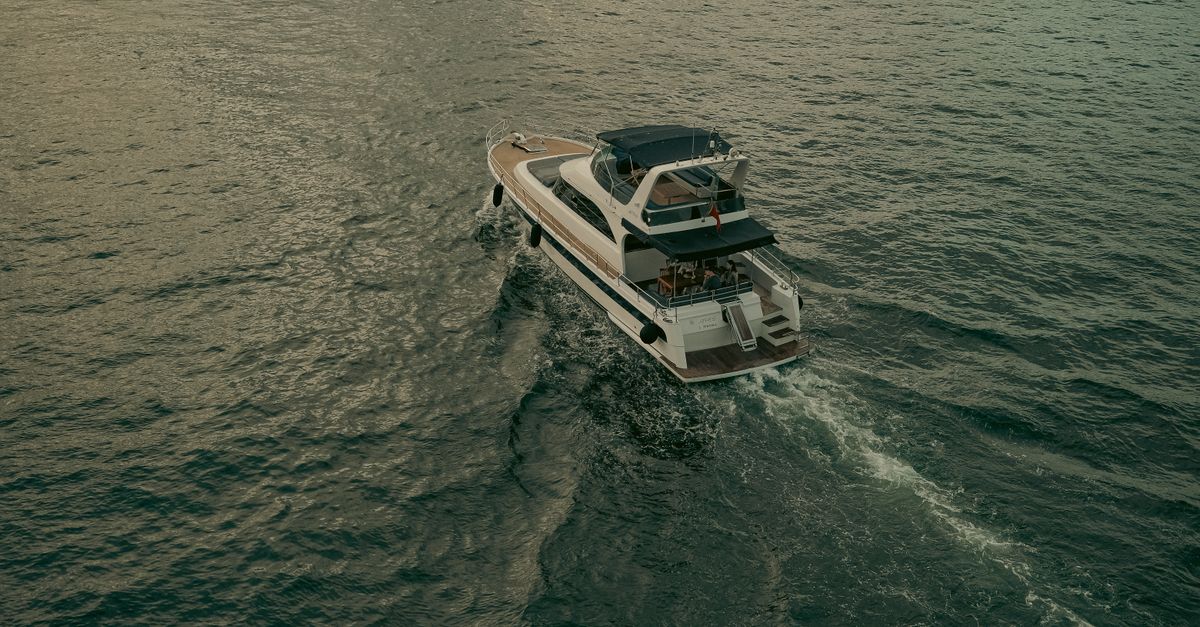
On 2 March 2015, in the deep water of the Sibuyan Sea off the Philippines, a remotely operated submarine drifted over the wreck of the Musashi, one of the two largest battleships ever built, lost since 1944 and unseen for seventy-one years. The images went around the world. What most people did not fully register was how the wreck had been found. It was not a navy or a government research institute that located it. It was a private yacht, owned by a Microsoft co-founder, and the story of that yacht is the best argument in all of boating for a simple idea: that the most interesting thing wealth can buy is not a way to be seen, but a way to go where no one else can.
A different kind of billionaire's toy
The yacht was Octopus, and when Paul Allen took delivery of her from the German shipyard Lürssen in 2003, she was, at 126 metres, one of the largest yachts in the world. But size was the least interesting thing about her. Allen, the man who had co-founded Microsoft with Bill Gates, did not want a floating palace for the Mediterranean. He wanted a working ship that happened to be beautiful, and he specified her accordingly.
Octopus carried two submarines. One of them was a proper crewed submersible, capable of taking people deep below the surface; the other was a remotely operated vehicle designed to reach depths a person could not survive. She had an internal dock that opened from her stern and ran forward inside the hull, so a twenty-metre submarine and a tender could float in and out of the ship itself. She carried remotely operated deep-sea equipment, helicopters, and the crew to run all of it. She was, in every meaningful sense, a research vessel with the comfort of a yacht bolted on, rather than the other way around. Most owners buy a yacht to hold parties. Allen bought one to conduct expeditions.
The eight-year hunt
The Musashi discovery was not luck. It was the end of an eight-year search. Allen had a genuine, lifelong fascination with the history of the Second World War, and the Musashi, sister ship to the famous Yamato and one of the most powerful warships ever constructed, had gone down in 1944 with most of her crew, her exact resting place never recorded. Finding her meant combing vast areas of deep ocean, cross-referencing historical records, war diaries, and survivor accounts, and then deploying the kind of autonomous underwater technology that, at the time, almost no private individual possessed.
In the final phase, Allen's team used an autonomous underwater vehicle to survey a search area they had painstakingly narrowed down, and it detected the wreckage on only its third dive, resting around a thousand metres down. Then the remotely operated submarine went down to confirm it, and the world saw the great ship for the first time since the war. It was, in the truest sense, an act of history recovered, funded and directed privately, from the deck of a yacht.
More than one wreck
The Musashi was the most famous of Octopus and Allen's finds, but it was not the only one. Over the years, the ship and Allen's marine teams located and surveyed a series of significant wrecks and lost artefacts, contributing to naval history, working with governments to recover items of national importance, and returning objects of deep significance to the nations they belonged to. Octopus also served, more quietly, in genuine emergencies, and Allen made her available for search and recovery efforts that had nothing to do with his own interests. A yacht built for exploration turned out to be a yacht useful to the world.
When Paul Allen died in 2018, the obituaries mentioned the wealth and the technology company, but the people who paid closest attention remembered the wrecks, the submarines, and the sense that here was a man who had used an almost unimaginable fortune to satisfy an almost boyish curiosity about what lay at the bottom of the sea. Octopus was later sold, and the marine world hoped, quietly, that her new owners would understand what they had bought.
Why this is the real luxury
Here is our view, and it reaches well beyond boats. The ordinary superyacht is an exercise in visibility. It exists to be admired in a harbour, a statement of arrival, a thing that says look at me. There is nothing wrong with that, but it is, in the end, a limited ambition. Octopus represented something rarer and, to our eyes, far more compelling: the yacht as a key to genuine experience, autonomy, and discovery. Allen did not use his money to be seen. He used it to go and to find, to reach the places and answer the questions that are closed to everyone else.
This is exactly why the explorer yacht, the rugged, long-range, capable vessel built to cross oceans and linger in remote waters, has become the most quietly prestigious thing an owner can commission. The status is no longer the marina you are moored in. It is the coordinates you can reach, the wreck you can survey, the stretch of the Antarctic or the Arctic or the deep Pacific that your ship can take you to and hold you in safely. Octopus was the pioneer of that idea at the largest scale, and she reframed what a great yacht could be for.
The lesson for anyone with the means
The Musashi lay undiscovered for seventy-one years not because it was impossible to find, but because finding it required a combination of obsession, patience, technology, and resources that no ordinary institution could easily assemble. Paul Allen assembled it, on a yacht, because he wanted to, and in doing so he gave the world a piece of its own history back. That is the version of extraordinary wealth that we find genuinely admirable: not the biggest, the shiniest, or the most photographed, but the most capable, pointed at something worth doing.
The next time you see a great yacht in a harbour, ask the Octopus question. Not how much did it cost or how big is it, but where can it actually go, and what could it actually do. The answer separates the trophy from the tool, and the tool, in the hands of someone with real curiosity, is the far more interesting object. Paul Allen understood that better than almost anyone who has ever owned a boat, and a battleship lost for seventy-one years is the proof he left behind on the seabed.
More in Motors

She Bet Her Fortune on a Rusting Hull: Elizabeth Meyer and Endeavour
By 1984 the greatest racing yacht of the 1930s was a roofless steel shell filling with rain. One woman bought the wreck, put almost her entire net worth into it, and single-handedly revived an entire class.

The People Who Take Superyachts Where Yachts Cannot Go: EYOS Expeditions
Anyone can charter a yacht to the Riviera. Reaching Antarctica, the Northwest Passage, or the deepest point in the ocean takes a company that spent fifteen years learning how to do it safely.

The Yacht That Could Switch Its Engines Off: Feadship's Savannah
In 2015 a Dutch shipyard launched a superyacht that could run on a single diesel, on batteries, or in near-silence with almost nothing turning. It was the first of its kind, and it changed what owners ask for.