The Asthmatic Engineer Who Shrank the Camera: Oskar Barnack and the Leica
He could not lug the heavy plate cameras of his day up a mountain, so he built a tiny one that used strips of movie film. In doing so he invented 35mm photography and handed the twentieth century its eyes.
By Marcus Feld
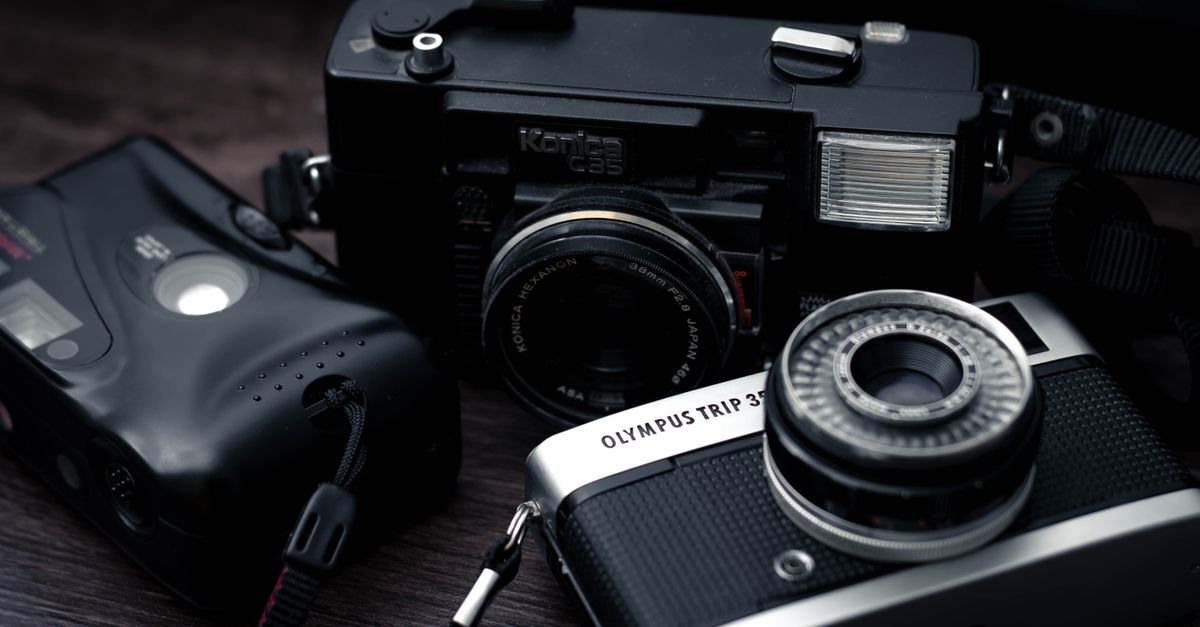
Nearly every photograph that defined the twentieth century, the war reportage, the street photography, the candid portraits of the famous and the unknown, the decisive moments captured on the fly, was made possible by a small camera that an asthmatic German engineer designed because he was too short of breath to carry the heavy equipment of his day. His name was Oskar Barnack, the camera became the Leica, and the format he invented, 35mm film, would dominate photography for the better part of a century. It is one of the purest examples in all of design of a personal limitation becoming a world-changing innovation, and it teaches a lesson about constraint that reaches far beyond cameras.
The problem of breath and weight
At the beginning of the twentieth century, serious photography was a heavy, cumbersome business. Cameras used large glass plates, and a photographer heading out to work carried a substantial wooden camera, a sturdy tripod, and a supply of fragile, weighty plates, an entire porter's load of equipment. For most people this was merely inconvenient. For Oskar Barnack, an engineer working at the optics company Ernst Leitz in the German town of Wetzlar, it was close to impossible. Barnack suffered from asthma, and hauling the standard photographic kit into the countryside and up the hills he loved to photograph left him gasping, unable to breathe.
His response was the response of a true engineer. Rather than give up photography or simply endure the struggle, he asked whether the equipment itself could be radically reduced. What if a camera could be small and light enough to slip into a coat pocket, carried all day without strain, and still produce an image good enough to enlarge? It was, at the time, close to a contradiction in terms. Small cameras made small, poor images; good images required big, heavy cameras. Barnack set out to break that trade-off, and his own weak lungs were the reason he tried.
A camera made from movie film
His solution was a stroke of lateral genius. The film industry, then young, ran on 35mm cinema film, long strips of it, moving through movie cameras frame by tiny frame. Barnack had the idea of building a small still camera that used this same 35mm motion-picture film, but turning the film sideways and exposing a frame twice the normal cinema size to gather enough detail. Around 1913 and 1914 he built a prototype, later known as the Ur-Leica, the original Leica, a compact device that captured images on a horizontal strip of 35mm film. It was tiny, light, and, crucially, its small negatives could be enlarged into good photographs.
This was the birth of 35mm still photography, the format that would become the global standard for generations. Barnack had not merely made a smaller camera; he had invented an entire new way of recording images, one built around a cheap, widely available film stock and a frame size that balanced portability against quality almost perfectly. The First World War interrupted development, but the idea was sound and it survived.
The gamble to make it
An invention is not the same as a product, and the Leica might have remained a clever prototype had it not been for a decision by Barnack's employer that carried real risk. After the war, Barnack persuaded the head of the company, Ernst Leitz, to gamble on producing his little camera commercially. The established photographic world was sceptical; serious photographers doubted that such a tiny device could ever be a proper tool rather than a toy. Making it meant betting a respected optics company's resources on an unproven idea aimed at a market that did not yet exist.
Leitz took the bet. A small run of pre-production cameras was made, and then, in the mid-1920s, the camera was launched properly, at a trade fair, under the name Leica, a compression of Leitz Camera. And the sceptics were routed. The Leica was a sensation. It did exactly what Barnack had dreamed: it let a photographer carry a capable camera anywhere, effortlessly, ready at a moment's notice, and it produced images of a quality no one had believed possible from something so small.
The photographs it made possible
Here is where the significance of Barnack's breathing problem becomes world-historical, and it is worth spelling out. By making the camera small, light, quick, and unobtrusive, the Leica did not just make photography more convenient. It made entirely new kinds of photography possible. A photographer could now move through the world quickly and quietly, camera in hand, capturing life as it actually happened rather than staging it in front of a heavy tripod. Candid street photography, fast-moving war reportage, intimate documentary work, the whole art of catching the fleeting, unrepeatable moment: all of it was born from the Leica's portability.
Some of the most celebrated photographers of the century built their art on this new freedom, roaming cities and battlefields with a small camera that let them be present, quick, and invisible in a way the old equipment never allowed. The visual record of the twentieth century, the images that shaped how we remember its wars, its cities, its ordinary and extraordinary lives, was captured overwhelmingly on the format that a wheezing engineer had devised so that he could photograph the hills without collapsing.
The lesson hidden in the limitation
We will end on the view the story presses on us, because it is genuinely useful. Oskar Barnack did not invent the Leica in spite of his asthma. He invented it because of it. His physical limitation forced him to ask a question that healthier, stronger photographers had no reason to ask: does the equipment really have to be this heavy? Everyone else could carry the big cameras, so no one else was motivated to reinvent them. Barnack could not, and so he was the one who did, and the whole world benefited from the workaround he was forced to find.
That pattern recurs constantly in the history of innovation, and it is worth carrying with you. Constraints, limitations, the things we cannot do, are not only obstacles. They are frequently the engines of creativity, because they force us to question assumptions that the unconstrained never think to challenge. The person who cannot do it the normal way has to find a new way, and the new way sometimes turns out to be better for everyone. Barnack's weak lungs gave the world 35mm photography and, through it, much of its visual memory. The next time a limitation seems only like a burden, remember the asthmatic engineer who could not carry a camera up a hill, and who therefore built the one that changed how humanity sees itself.